Opening New Ways

MAGUSTM : Magnetic Gastrointestinal Universal Septotome

Slow surgery

Slowsurg develops and commercializes an innovative platform called MAGUSTM for MAGnetic Gastrointestinal Universal Septotome.

MAGUSTM is an endoscopic platform designed to create anastomoses — connections between two anatomical cavities or passages — without conventional surgery.
The concept is based on controlled local ischemia, meaning a temporary reduction in blood flow to the targeted tissues. The MAGUSTM device is positioned endoscopically in just a few minutes. Once in place, it gradually compresses the tissues, allowing them to be cut and fused over a period of approximately 2 to 3 weeks.
During this time, the device remains in place while the patient can return home and continue normal daily activities. This approach can therefore be described as a form of “slow surgery”, in which the therapeutic effect takes place progressively after the initial endoscopic procedure.
The potential advantages of this approach include its minimally invasive nature and the avoidance of conventional surgical incision. By creating anastomosis progressively, the MAGUSTM concept is designed to reduce some of the risks and complications associated with standard gastrointestinal surgery, such as bleeding, leakage, and fistula formation.
This innovative “slow surgery” concept is intended to address selected gastrointestinal conditions using the MAGUSTM device.

MAGUSTM Technology

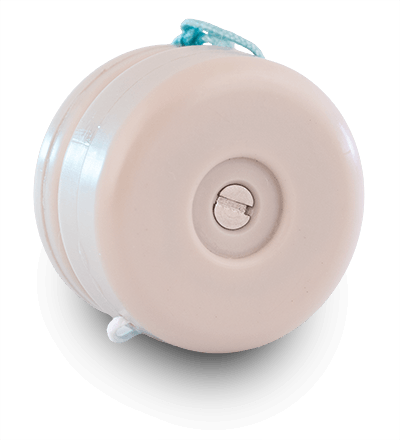
MAGUSTM technology is based on a dual compression mechanism combining two magnetic elements with a retractable wire.
Together, these components generate controlled and sustained pressure on targeted tissues.
This pressure induces localized ischemia and progressive tissue necrosis at the compression site.
At the same time, the surrounding tissues are brought into close contact, supporting their fusion and the creation of a new passage.
This mechanism enables MAGUSTM to achieve a gradual, minimally invasive tissue remodeling process through an endoscopic approach.

MAGUSTM is an endoscopic technology designed to treat selected gastrointestinal conditions involving a septum or blind pouch, such as candy cane syndrome, certain esophageal diverticula, and specific post-surgical GI complications.

Compared with revisional surgery, this minimally invasive approach may reduce procedural burden and the risks associated with leaks, fistulas, bleeding, infection, and prolonged hospitalization.
It may also provide an alternative in patients for whom surgery is technically complex or associated with significant risk (mortality, morbidity,…).
The treatment is performed endoscopically and is designed to achieve anatomical remodeling through a single device-placement procedure.
MAGUSTM therefore offers a promising minimally invasive option for gastrointestinal disorders for which current treatments remain limited, risky, invasive, or technically demanding.

Candy Cane Syndrome

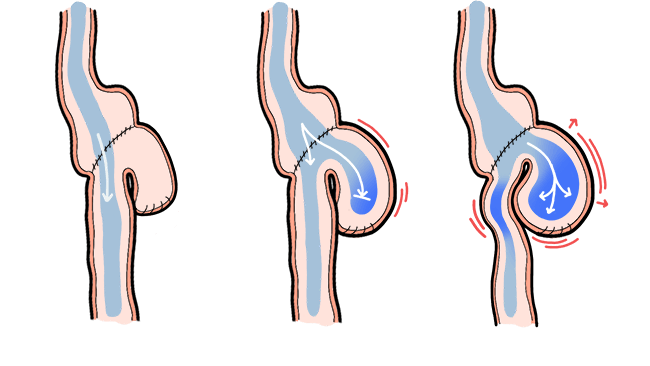
Candy Cane Syndrome (CCS) is a post-surgical complication that can occur after procedures such as Roux-en-Y gastric bypass or gastrectomy with end-to-side anastomosis. It results from the persistence or the creation of an excessively long blind jejunal limb next to the functional intestinal pathway. Food and liquids may preferentially enter this blind pouch instead of progressing normally through the digestive tract.

The image illustrates this mechanism from left to right: first, the blind limb is present beside the normal passage; then, luminal contents are progressively diverted into the pouch; finally, repeated filling causes distension and increased pressure within the blind limb. This abnormal flow can lead to symptoms such as postprandial pain, nausea, regurgitation, vomiting, early satiety, dysphagia, and sometimes weight loss.

The therapeutic goal is therefore to eliminate or remodel the septum separating the blind pouch from the functional lumen, restoring a more direct and physiological passage of food.

MAGUSTM for Candy Cane Syndrome

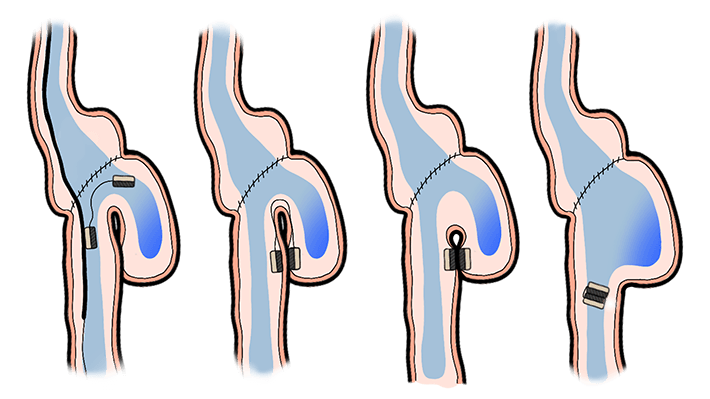
MAGUSTM device is used to treat Candy Cane Syndrome by creating a progressive septotomy. From left to right, the device is delivered endoscopically and positioned with one magnet on each side of the septum separating the functional lumen from the blind pouch. Once released, the magnets attract each other across the tissue while the self-retracting wire lies over the top of the septum. Over time, the combined magnetic compression and wire traction induce gradual tissue necrosis and cutting of the septum. When the septum is completely divided, the blind pouch is opened into the main digestive lumen, restoring a more direct passage for food and reducing pouch distension and symptoms.


This animation illustrates the implantation and mechanism of action of the MAGUSTM system. The device is deployed through a minimally invasive procedure that can be completed in less than 15 minutes. Following implantation, the patient resumes normal daily activities while MAGUSTM induces a controlled and progressive tissue-cutting process, resulting in the formation of a calibrated gastric restriction within less than one month in the patient. The animation presents the transition from device placement to the final anatomical configuration achieved through this gradual tissue remodeling process.

Clinical Development

see file: CCS_human.

A first clinical study of MAGUSTM has been completed and demonstrated the initial feasibility and safety of the technology in patients with gastrointestinal septa, including esophageal diverticula and Candy Cane Syndrome (CCS). In the CCS cohort, 14 patients were treated endoscopically with MAGUSTM, with complete septotomy achieved and significant improvement in symptoms and quality-of-life scores at follow-up; no device- or procedure-related serious adverse events were reported. This study is registered on ClinicalTrials.gov as NCT04480216 – “MAgnetic Gastrointestinal Universal Septotome: a Safety and Feasibility Study.”

A second clinical study is currently ongoing to further evaluate the safety and clinical performance of MAGUSTM specifically for Candy Cane Syndrome / postoperative blind loop syndrome. This prospective, open-label, single-center study plans to include 51 patients, with follow-up up to 12 months after the procedure. Its objectives include assessing treatment success, symptom improvement, quality of life, and device-related adverse events. The study is registered as NCT05938439 – “Evaluation of the Performance of MAgnetic Gastrointestinal Universal Septotome for Treatment of Candy Cane Syndrome (MAGUS-CCS).”

New research and developments

Slowsurg is performing new research & developments to apply the MAGUSTM concept to other indications. We have current project aiming to develop an innovative instrument for remodeling the digestive tract, specifically for creating large anastomoses. Based on the MAGUSTM concept, the treatment relies on slow cutting induced by controlled pressure, causing progressive ischemia leading to necrosis, followed by healing. Slowsurg is supported by Wallonn region and other institutions in these R&D activities.

Publications & Awards